
Your AI Butler Just Got Smarter: What the French Privacy Watchdog Wants You to Know About Agentic AI

Table of Contents
What Is Agentic AI and Why Should You Care?
Agentic AI refers to systems that can act autonomously on behalf of a user—think of a personal assistant that books your appointments, orders your groceries, or even negotiates contracts without you lifting a finger. Sounds convenient, right? But behind the scenes, these agents are processing massive amounts of personal data, often across multiple services and jurisdictions. The French data protection authority (CNIL) and the French AI and Digital Council have just published an exploratory note to dissect the privacy implications. Read the original note here.
The GDPR Compliance Challenge
Agentic AI creates complex chains of data processing. For example, an AI agent might need to access your calendar, email, bank account, and health app to plan a trip. Each of these services has its own data controller, and the agent itself might be a separate controller or processor. The CNIL note highlights that this hyper-personalization requires careful mapping of data flows and clear allocation of responsibilities under GDPR.
One key takeaway: transparency is paramount. Users must understand what data is being collected, by whom, and for what purpose. The note suggests that agents should provide real-time explanations of their actions and allow users to intervene at any point.
Featured Snippet: What is the main privacy risk of agentic AI?
The main privacy risk is the loss of control over personal data due to autonomous decision-making and complex data sharing across multiple services, which can lead to unauthorized processing or data breaches if not properly managed under GDPR.
Hyper-Personalization vs. Data Minimization
Agentic AI thrives on data—the more it knows about you, the better it can serve you. But GDPR's data minimization principle requires that only necessary data be collected. The CNIL note suggests that agents should be designed to request data on a need-to-know basis and to delete it when no longer needed. It's like having a butler who only asks for your preferences when planning a dinner party, not every time you walk into the kitchen.
Accountability and the 'Human in the Loop'
The note emphasizes the importance of keeping a human in the loop. Users should be able to override or review agent decisions, especially when those decisions have significant consequences (e.g., signing a contract). This aligns with GDPR's requirement for meaningful human intervention in automated decision-making.
Practical Steps for Compliance
- Conduct a Data Protection Impact Assessment (DPIA) specifically for agentic AI features.
- Map all data flows and identify each controller/processor in the chain.
- Implement transparent consent mechanisms that explain the agent's actions in plain language.
- Provide users with easy-to-use controls to pause, modify, or delete agent actions.
- Ensure data is encrypted both in transit and at rest, and that access is logged.
Reading the CNIL note might feel as thrilling as reading the terms and conditions of a new app—but it's essential. The agency is essentially giving us a roadmap to avoid future fines and user distrust.
FAQ
Does agentic AI always require explicit consent?
Yes, under GDPR, processing personal data for agentic AI typically requires explicit consent unless another legal basis applies. The CNIL note stresses that consent must be specific, informed, and unambiguous, especially when the agent acts across multiple services.
Can an AI agent be considered a data controller?
It depends. If the agent determines the purposes and means of processing (e.g., it decides which data to collect and how to use it), it may be a controller. However, in many cases, the agent acts as a processor on behalf of the user or the service provider. The CNIL note advises a case-by-case analysis.
What happens if an agent makes a mistake with my data?
Under GDPR, the data controller (which could be the agent's developer or the service provider) is liable for any breach or misuse. Users have the right to rectification, erasure, and to lodge a complaint with a supervisory authority. The CNIL note recommends that agents log all actions to facilitate accountability.

NakedPact Editorial Committee
Article created by the NakedPact editorial team. Our mission is to analyze, simplify, and expose unfair terms and hidden risks in everyday contracts to protect citizens and consumers.
Sources and Legal References
Do you own a website?
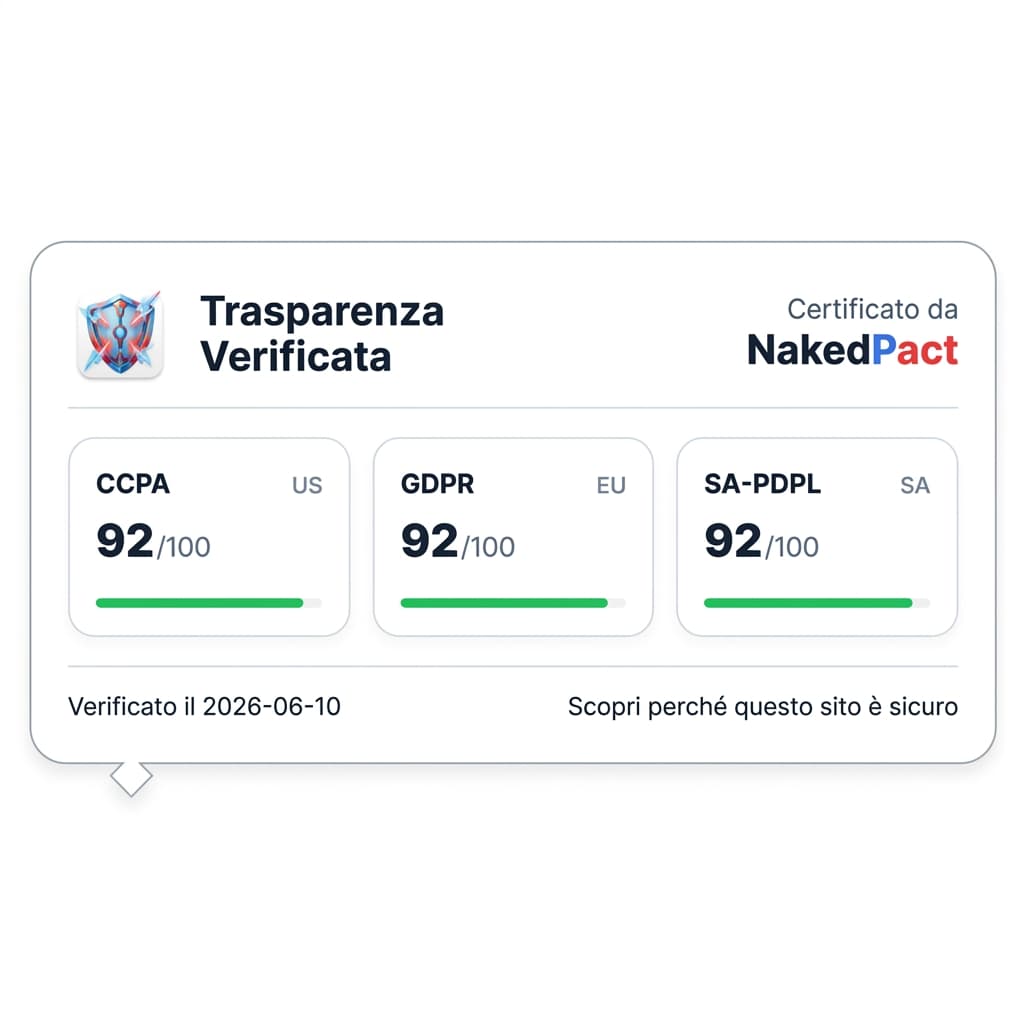
Want to communicate your data processing transparency to your users? Dynamically use our badge and showcase your platform's compliance.
Recommended Readings


🛡️ Protect your rights with one click
Don't risk signing abusive clauses. Install the free NakedPact extension for Chrome or Firefox and instantly analyze any contract on the web.
Don't trust, verify.
Now that you know the risks, don't sign blindly. Upload your contract to NakedPact and let AI find the hidden clauses for you. It's 100% free.
Analyze Your Contract Now