
Your Financial Data Up for Auction: How 200,000 Cards Ended Up on the Dark Web

Table of Contents
How did 200,000 credit cards end up on the Dark Web?
200,000 credit cards ended up on the Dark Web due to a combination of targeted cyberattacks, bank data breaches, and phishing. Cybercriminals exploited vulnerabilities in payment systems and corporate security, stealing card numbers, expiration dates, and CVV codes, then auctioning them on dark web forums.
Imagine waking up one morning to find your credit card used for purchases around the world. It's not science fiction: it happened to thousands of Italians. According to recent reports, over 200,000 credit cards were stolen and sold on the Dark Web, with prices starting at a few euros. But how is this possible? And, most importantly, what can you do to protect yourself?
The truth is your financial data is more vulnerable than you think. Every time you make an online purchase, use an ATM, or enter your card on a site, you leave a digital trail. Cybercriminals know how to exploit it. They use techniques like skimming (physical cloning), phishing (deceptive emails), and attacks on corporate databases. Once obtained, they resell the data to the highest bidder on encrypted dark web forums.
You don't need to be a security expert to defend yourself. Start with small habits: use virtual or prepaid cards for online purchases, enable transaction notifications, and never save card data on browsers or sites. If you notice suspicious activity, immediately block your card and contact your bank. Remember: you are the first line of defense against fraud.
European regulations, like GDPR, give you powerful tools. Banks and payment institutions are required to refund unauthorized transactions, unless you are grossly negligent. But beware: if you don't report anomalies promptly, you may lose the right to a refund. So, regularly check your statements and act immediately if you have doubts.
The case of 200,000 cards is just the tip of the iceberg. Every year, billions of euros are stolen from unsuspecting consumers. Awareness makes the difference. Knowing how attacks work helps you avoid them. For example, never click on suspicious links in emails that appear to be from your bank: real institutions never ask for sensitive data via email.
In Italy, the Data Protection Authority has intensified controls, but the problem remains global. The solution? A combination of good personal practices and pressure on legislators for stricter regulations. California, for example, with CCPA/CPRA, imposed severe obligations on companies regarding data transparency. Compared to the American model, Europe is more protective, but more digital education for consumers is still needed.
Don't wait until it's too late. Protect your financial data today: use strong passwords, enable two-factor authentication, and be wary of offers that seem too good to be true. The dark web is a ruthless market, but with the right precautions, you can keep your money safe.

NakedPact Editorial Committee
Article created by the NakedPact editorial team. Our mission is to analyze, simplify, and expose unfair terms and hidden risks in everyday contracts to protect citizens and consumers.
Sources and Legal References
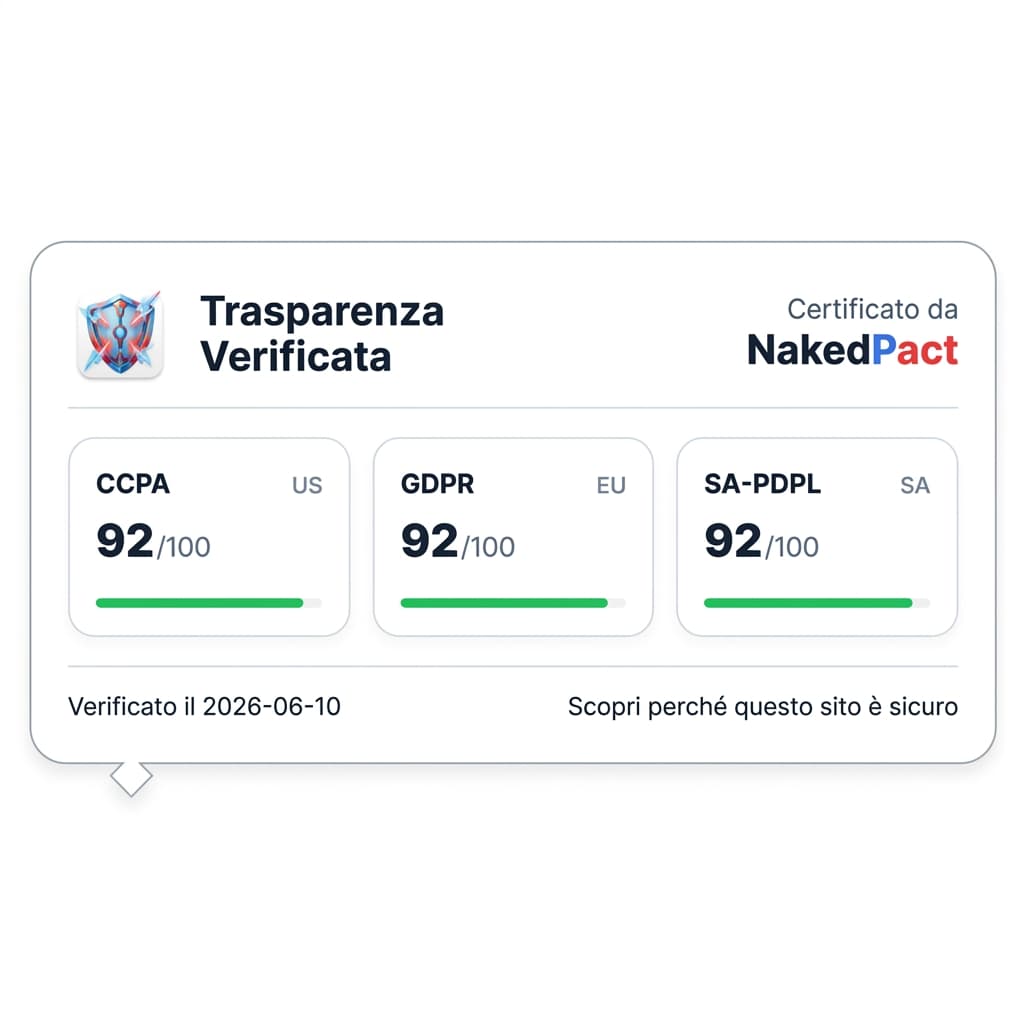
Do you own a website?
Want to communicate your data processing transparency to your users? Dynamically use our badge and showcase your platform's compliance.
Recommended Readings

🛡️ Protect your rights with one click
Don't risk signing abusive clauses. Install the free NakedPact extension for Chrome or Firefox and instantly analyze any contract on the web.
Don't trust, verify.
Now that you know the risks, don't sign blindly. Upload your contract to NakedPact and let AI find the hidden clauses for you. It's 100% free.
Analyze Your Contract Now