
Your Employees Are Running Secret AI Experiments: Here's How to Find and Fix Shadow AI

Table of Contents
What Is Shadow AI and Why Should You Care?
Shadow AI is the unauthorized use of artificial intelligence tools by employees—think ChatGPT for drafting emails, Grammarly for polishing reports, or Midjourney for creating marketing visuals. A recent study found that over 50% of workers resort to these unapproved solutions when their company doesn't provide an official alternative. It's like employees bringing their own ketchup to a restaurant because the house sauce is bland.
But here's the kicker: every time a staffer pastes customer data into a free AI tool, they might be violating GDPR, CCPA, or industry-specific regulations. The legal risk is real, and it's growing faster than you can say 'data breach.'
How to Discover Shadow AI in Your Organization
Start by auditing network traffic and browser extensions. Tools like Zscaler or Netskope can flag unusual API calls to known AI endpoints. Also, survey your teams anonymously—ask what tools they use and why. You might be surprised to learn that your sales team relies on an AI-powered CRM that IT never approved.
Another telltale sign: employees sharing AI-generated content that contains company logos or confidential data. Monitor for such leaks in internal communication channels like Slack or Teams.
Classifying Shadow AI: From Benign to Dangerous
Not all Shadow AI is evil. Some tools are harmless productivity boosters. Create a classification system:
- Low risk: Tools that process no personal data (e.g., AI for generating stock images).
- Medium risk: Tools that handle internal but non-sensitive data (e.g., meeting summarizers).
- High risk: Tools that process personal data, financial info, or trade secrets (e.g., AI chatbots used for customer support).
Focus your governance efforts on high-risk tools first. Remember, a tool that's 'free' often means your data is the product.
Governing Shadow AI Without Killing Innovation
Banning all AI tools is like banning calculators in an accounting firm—it's counterproductive. Instead, create a 'safe list' of approved AI tools that meet your security and privacy standards. Provide training on what constitutes acceptable use. And most importantly, make it easy for employees to request new tools through a streamlined approval process.
Under GDPR, you're responsible for any data processing that occurs on your behalf—even if you didn't authorize it. So ignoring Shadow AI isn't an option. Treat it like a fire hazard: you need detectors, extinguishers, and an evacuation plan.
Featured Snippet Bait
Shadow AI refers to employees using AI tools without IT approval. Over 50% of workers do this when no official tool is provided, creating GDPR risks. To govern it, audit network traffic, classify tools by risk, and offer approved alternatives.
FAQ
What is Shadow AI?
Shadow AI is the use of artificial intelligence tools by employees without the knowledge or approval of their organization's IT or security departments. It often involves free or consumer-grade AI services that may not comply with corporate data protection policies.
How can I detect Shadow AI in my company?
You can detect Shadow AI by monitoring network traffic for connections to known AI APIs, surveying employees anonymously, and reviewing browser extensions installed on company devices. Also, look for AI-generated content that includes company data in internal communications.
What are the legal risks of Shadow AI under GDPR?
Under GDPR, the data controller (your company) is responsible for any processing of personal data, even if done by employees using unauthorized tools. This can lead to fines for non-compliance, data breaches, and loss of customer trust. High-risk tools that process personal data without proper safeguards are the biggest concern.

NakedPact Editorial Committee
Article created by the NakedPact editorial team. Our mission is to analyze, simplify, and expose unfair terms and hidden risks in everyday contracts to protect citizens and consumers.
Sources and Legal References
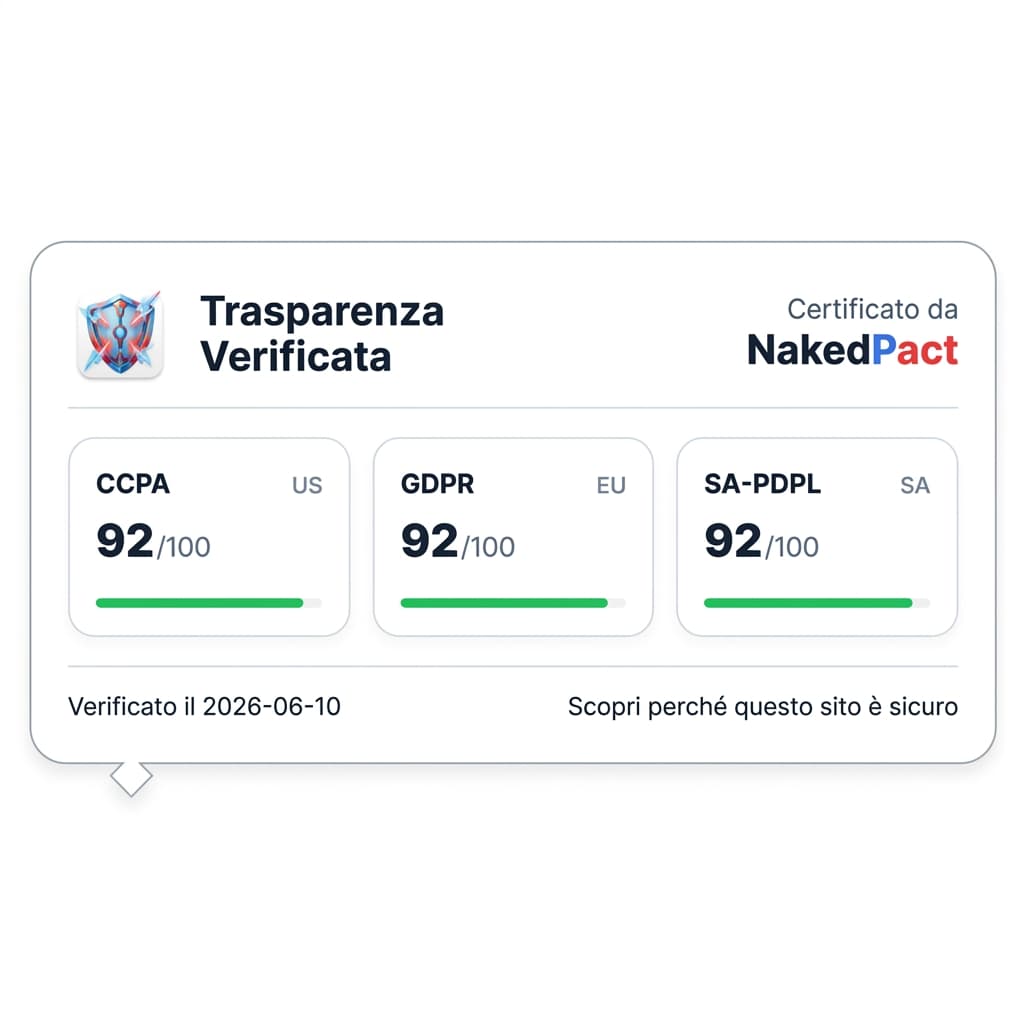
Do you own a website?
Want to communicate your data processing transparency to your users? Dynamically use our badge and showcase your platform's compliance.
Recommended Readings


🛡️ Protect your rights with one click
Don't risk signing abusive clauses. Install the free NakedPact extension for Chrome or Firefox and instantly analyze any contract on the web.
Don't trust, verify.
Now that you know the risks, don't sign blindly. Upload your contract to NakedPact and let AI find the hidden clauses for you. It's 100% free.
Analyze Your Contract Now