
Seafile Privacy & Security Review: Self-Hosted Cloud Storage Pros, Cons & Data Protection Guide

Table of Contents
Seafile Privacy & Security Review: Self-Hosted Cloud Storage Pros, Cons & Data Protection Guide
How secure and privacy-respecting is Seafile for storing your files?
Seafile is highly secure when self-hosted: you control the server, data stays in your jurisdiction, and it supports TLS, client-side encryption with Cryptomator, and 2FA. However, default server-side encryption is not zero-knowledge, and the cloud version stores data in Germany (EU) with GDPR compliance, but US users should be aware of CLOUD Act risks if using US-based servers.
What the service offers (Strengths and Weaknesses)
Strengths
- Full data control: Self-hosting means you own your data, no third-party access.
- Strong encryption: TLS in transit; client-side encryption via Cryptomator or Rclone for zero-knowledge.
- Open source: Code is auditable, community-driven.
- 2FA & sharing controls: Two-factor authentication, password-protected shares with expiration.
- GDPR compliance: EU hosting (Seafile Cloud) ensures strict data protection.
Weaknesses
- No built-in E2EE: Server-side encryption is not zero-knowledge; admin can access files.
- Complex setup: Self-hosting requires technical skills (server, Docker, etc.).
- Limited mobile apps: Features lag behind desktop.
- No file scanning for malware: You must implement your own antivirus.
- CLOUD Act exposure: If using US-based servers, US authorities can demand data.
Privacy & Terms of Service Analysis
Encryption: Seafile uses TLS 1.3 for data in transit. Server-side encryption (AES-256) is available but not zero-knowledge: the server holds the encryption keys. For true zero-knowledge, use client-side encryption with Cryptomator or Rclone. No E2EE by default.
Data centers: Seafile Cloud servers are in Germany (EU). Self-hosted can be anywhere. US hosting exposes data to CLOUD Act.
File scanning for AI: Seafile does not scan files for AI training; no telemetry or data mining.
Telemetry: Minimal; optional usage statistics can be disabled.
CLOUD Act: If you host in the US, data may be subject to US law enforcement requests. Self-hosting in EU or your own country mitigates this.
Practical Guide: How to Protect Your Privacy on Seafile
- Enable 2FA: Go to Settings > Password & Security > Enable Two-Factor Authentication.
- Use client-side encryption: Install Cryptomator or Rclone and encrypt files before uploading. Seafile will store encrypted blobs.
- Disable telemetry: In server config, set
ENABLE_METRICS = FalseandSEND_STATISTICS = False. - Secure sharing: Always set passwords and expiration dates for shared links. Use 'encrypted sharing' if available.
- Self-host in a privacy-friendly jurisdiction: Choose a hosting provider in EU or your country to avoid CLOUD Act.
- Regular updates: Keep Seafile server and clients updated to patch vulnerabilities.
CCPA & CPRA Compliance (Robin Hood Rule)
Under the California CCPA and CPRA, users have the right to know what personal data is collected and to request deletion. Seafile, when self-hosted, collects minimal data (email, usage logs). However, compared to US-based cloud services like Google Drive or Dropbox, Seafile's self-hosted model inherently limits data exposure. The California CCPA requires businesses to disclose data sharing practices; Seafile's open-source nature allows full transparency. For CPRA compliance, ensure your Seafile instance logs access and provides a mechanism for data deletion requests. Unlike US services, Seafile does not sell data or use it for advertising, aligning with the spirit of the CCPA.
FAQ
Is Seafile truly zero-knowledge?
No, by default Seafile uses server-side encryption where the server holds the keys. For zero-knowledge, use client-side encryption with Cryptomator or Rclone.
Can I host Seafile on my own server?
Yes, Seafile is designed for self-hosting. You can install it on Linux, Docker, or Raspberry Pi. Full documentation is available.
Does Seafile comply with GDPR?
Yes, Seafile Cloud is hosted in Germany and follows GDPR. Self-hosted instances can be configured to comply with local data protection laws.

NakedPact Editorial Committee
Article created by the NakedPact editorial team. Our mission is to analyze, simplify, and expose unfair terms and hidden risks in everyday contracts to protect citizens and consumers.
Sources and Legal References
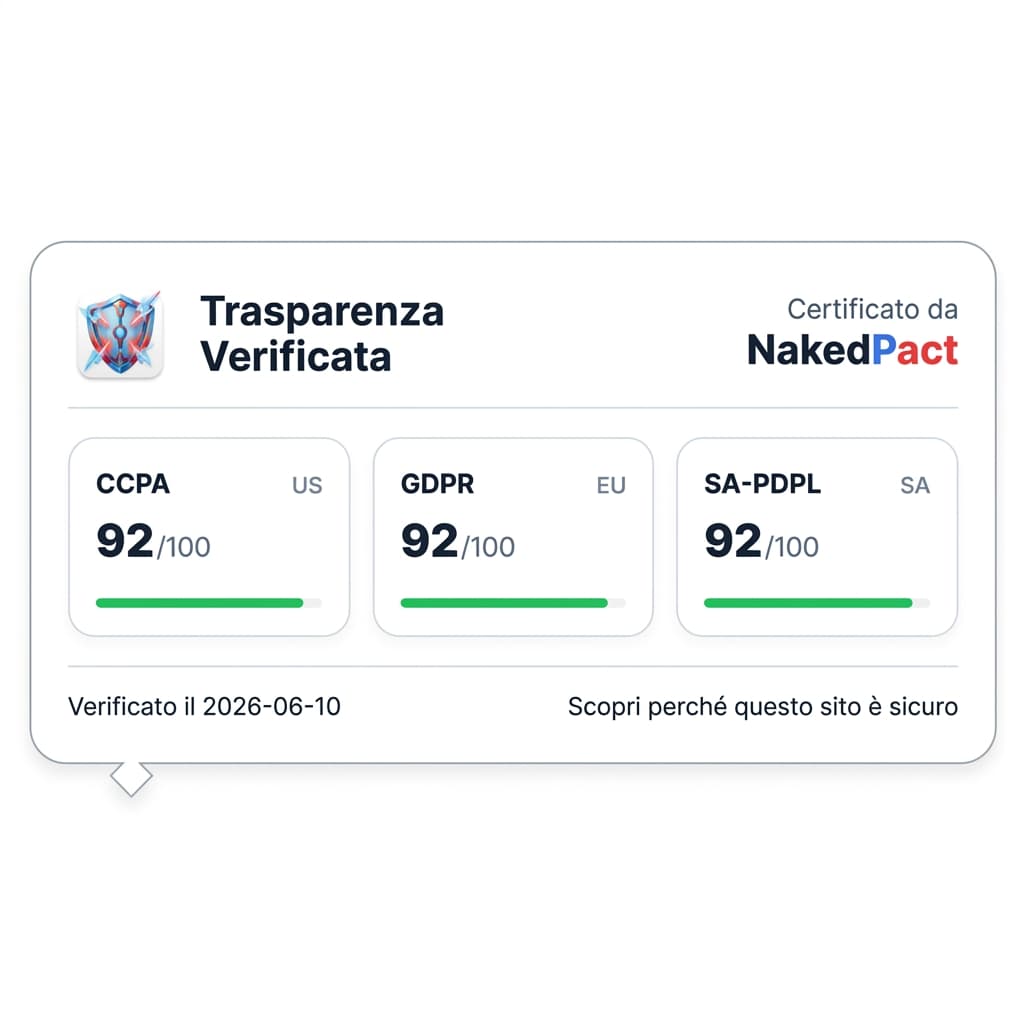
Do you own a website?
Want to communicate your data processing transparency to your users? Dynamically use our badge and showcase your platform's compliance.
Recommended Readings


🛡️ Protect your rights with one click
Don't risk signing abusive clauses. Install the free NakedPact extension for Chrome or Firefox and instantly analyze any contract on the web.
Don't trust, verify.
Now that you know the risks, don't sign blindly. Upload your contract to NakedPact and let AI find the hidden clauses for you. It's 100% free.
Analyze Your Contract Now