
Alipay, WeChat, and the Data Grab: How to Tame China's Mini-Programs

Table of Contents
You open WeChat to order coffee, and suddenly the mini-program wants your location, contacts, and photo album. Sound familiar? China's Personal Information Protection Law (PIPL) has turned this data grab into a legal minefield. Let's cut through the noise.
What PIPL Means for Mini-Programs
Mini-programs are lightweight apps inside WeChat, Alipay, and other super-apps. They're convenient, but they've been hoovering data like a vacuum cleaner at a glitter factory. PIPL now requires explicit consent for each data point, and you can't just bundle it all into one checkbox.
Featured Snippet Bait: Under PIPL, mini-programs must obtain separate, informed consent for each type of personal data collected, and cannot deny service if users refuse non-essential data.
The Consent Trap
Most mini-programs use a single pop-up: "Allow access to your data?" That's a PIPL violation. You need granular consent—one for location, one for contacts, one for camera. Think of it like a buffet: let users pick what they want, not force-feed them everything.
And don't even think about pre-ticked boxes. The Cyberspace Administration of China (CAC) has fined companies for that. Check the official PIPL text for details.
Data Minimization: Less Is More
PIPL's data minimization principle means you can only collect what's necessary for the service. If your mini-program is a flashlight app, you don't need the user's contact list. That's like asking for someone's dental records to buy a sandwich.
Audit your data collection. Remove anything that isn't essential. And if you're sharing data with third parties (like analytics providers), you need separate consent for that too.
Cross-Border Data Transfers
If your mini-program sends data outside China, you're in for a treat. PIPL requires a security assessment, a standard contract, or certification. Many companies have set up data centers in China to avoid the headache. But if you must transfer, get legal advice—the penalties are up to 5% of annual revenue.
Practical Steps for Compliance
- Map all data flows in your mini-program.
- Implement granular consent pop-ups.
- Update your privacy policy to be PIPL-compliant.
- Limit data retention to what's necessary.
- Train your team on PIPL requirements.
Remember, PIPL enforcement is ramping up. The CAC has already fined major tech firms. Don't wait for a warning—act now.
FAQ
Do mini-programs need a separate privacy policy?
Yes. Each mini-program should have its own privacy policy that clearly states what data is collected, why, and how it's used. It must be easily accessible before data collection begins.
Can I use pre-checked boxes for consent?
No. PIPL requires affirmative, opt-in consent. Pre-checked boxes are considered invalid. Users must actively tick each box for each data type.
What happens if I don't comply?
Penalties include fines up to 5% of annual revenue, suspension of services, and even criminal liability for serious violations. The CAC can also order data deletion.
PIPL Compliance Checklist for Mini-Programs
- Data Flow Mapping Identify all data collection points
- Granular Consent Pop-ups Separate toggles for each data type
- Privacy Policy Update Include PIPL-required disclosures
- Data Minimization Audit Remove unnecessary data collection
- Third-Party Data Sharing Consent Obtain separate consent for sharing
- Cross-Border Transfer Assessment If applicable, complete security assessment

NakedPact Editorial Committee
Article created by the NakedPact editorial team. Our mission is to analyze, simplify, and expose unfair terms and hidden risks in everyday contracts to protect citizens and consumers.
Sources and Legal References
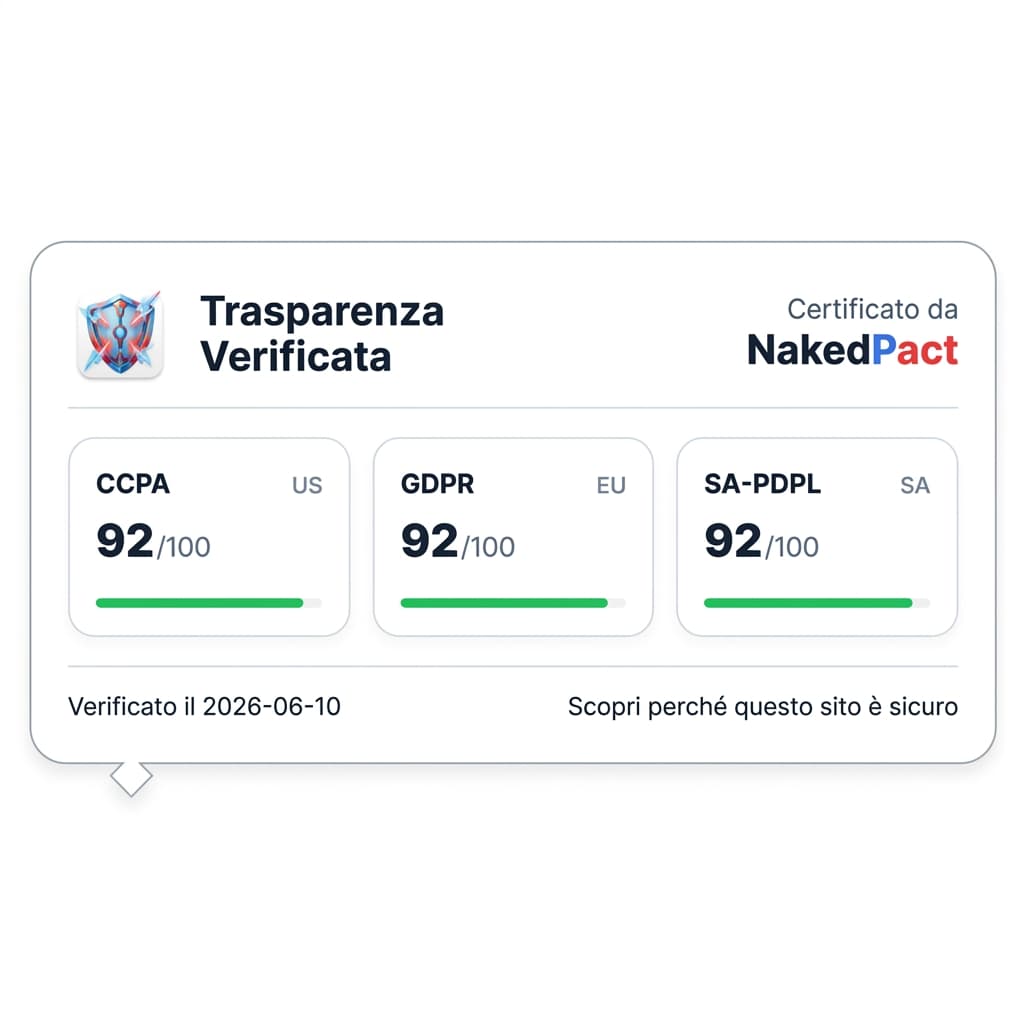
Do you own a website?
Want to communicate your data processing transparency to your users? Dynamically use our badge and showcase your platform's compliance.
Recommended Readings

The Hidden Arbitration Clause: How LegalTech Platforms Strip Your Right to a Judge

NIS2: Your Board Can't Hide Behind the CISO – ACN FAQ Drop the Mic

Brazilian Court Rules: One-Time Internet Outage Isn't Emotional Damages – But Here's When It Is
🛡️ Protect your rights with one click
Don't risk signing abusive clauses. Install the free NakedPact extension for Chrome or Firefox and instantly analyze any contract on the web.
Don't trust, verify.
Now that you know the risks, don't sign blindly. Upload your contract to NakedPact and let AI find the hidden clauses for you. It's 100% free.
Analyze Your Contract Now