
Thailand's PDPA Just Got Teeth: Why Your C-Suite Should Be Worried

Table of Contents
Thailand's PDPA: Criminal Penalties for Executives
If you thought data privacy was just a compliance checkbox, think again. Thailand's Personal Data Protection Act (PDPA) has just turned up the heat: company directors and executives can now face criminal penalties—including imprisonment—for data breaches. This isn't a slap on the wrist; it's a game-changer for corporate accountability.
Featured Snippet Bait: Under Thailand's PDPA, executives can face up to one year in prison and fines of up to 5 million baht for knowingly causing a data breach. This applies to directors, managers, and anyone with decision-making authority over personal data processing.
What Changed? A Quick Look at the Amendment
In May 2024, Thailand's parliament passed amendments to the PDPA, adding criminal liability for executives. Previously, only the legal entity (the company) could be fined. Now, individuals in charge can be personally prosecuted if they 'intentionally or negligently' cause a data breach that harms data subjects.
Think of it like this: before, if your company's data got leaked, it was like getting a parking ticket—annoying, but you paid it and moved on. Now, it's like getting a DUI—you could lose your license (and your freedom).
How Does It Compare to Singapore's PDPA?
Singapore's PDPA, on the other hand, focuses on financial penalties—up to 10% of annual turnover or SGD 1 million, whichever is higher. No criminal liability for executives. So why the difference? Thailand's approach reflects a cultural emphasis on personal responsibility, while Singapore leans toward corporate deterrence.
For multinationals operating in both countries, this means a split strategy: in Singapore, beef up your compliance budget; in Thailand, make sure your CEO knows they could be personally on the hook.
What Executives Need to Do Now
First, don't panic. But do take action. Here's a practical checklist:
- Appoint a Data Protection Officer (DPO) with real authority.
- Conduct a data mapping exercise to know exactly what personal data you hold.
- Implement technical measures like encryption and access controls.
- Train employees—especially senior management—on data breach response.
- Review your cyber insurance: does it cover executive liability?
Remember, ignorance is not a defense. The law expects executives to be proactive, not reactive.
The Silver Lining: Building Trust
While the threat of jail time is scary, it's also an opportunity. Companies that take data privacy seriously will stand out in a market where trust is scarce. Customers are more likely to share their data with businesses that demonstrate accountability from the top down.
So, yes, the stakes are higher. But so is the reward. Treat this as a chance to build a culture of privacy—not just a compliance exercise.
FAQ
What specific criminal penalties can executives face under Thailand's PDPA?
Executives can face up to one year in prison and/or fines up to 5 million baht (approx. USD 140,000) for knowingly or negligently causing a data breach that harms data subjects.
Does Singapore's PDPA have similar criminal liability for executives?
No, Singapore's PDPA does not impose criminal penalties on individuals. It focuses on financial penalties for the organization, up to 10% of annual turnover or SGD 1 million.
What should a company do to protect its executives from PDPA liability?
Implement robust data protection measures, appoint a DPO, conduct regular audits, provide training, and ensure breach response plans are in place. Consider executive liability insurance.

NakedPact Editorial Committee
Article created by the NakedPact editorial team. Our mission is to analyze, simplify, and expose unfair terms and hidden risks in everyday contracts to protect citizens and consumers.
Sources and Legal References
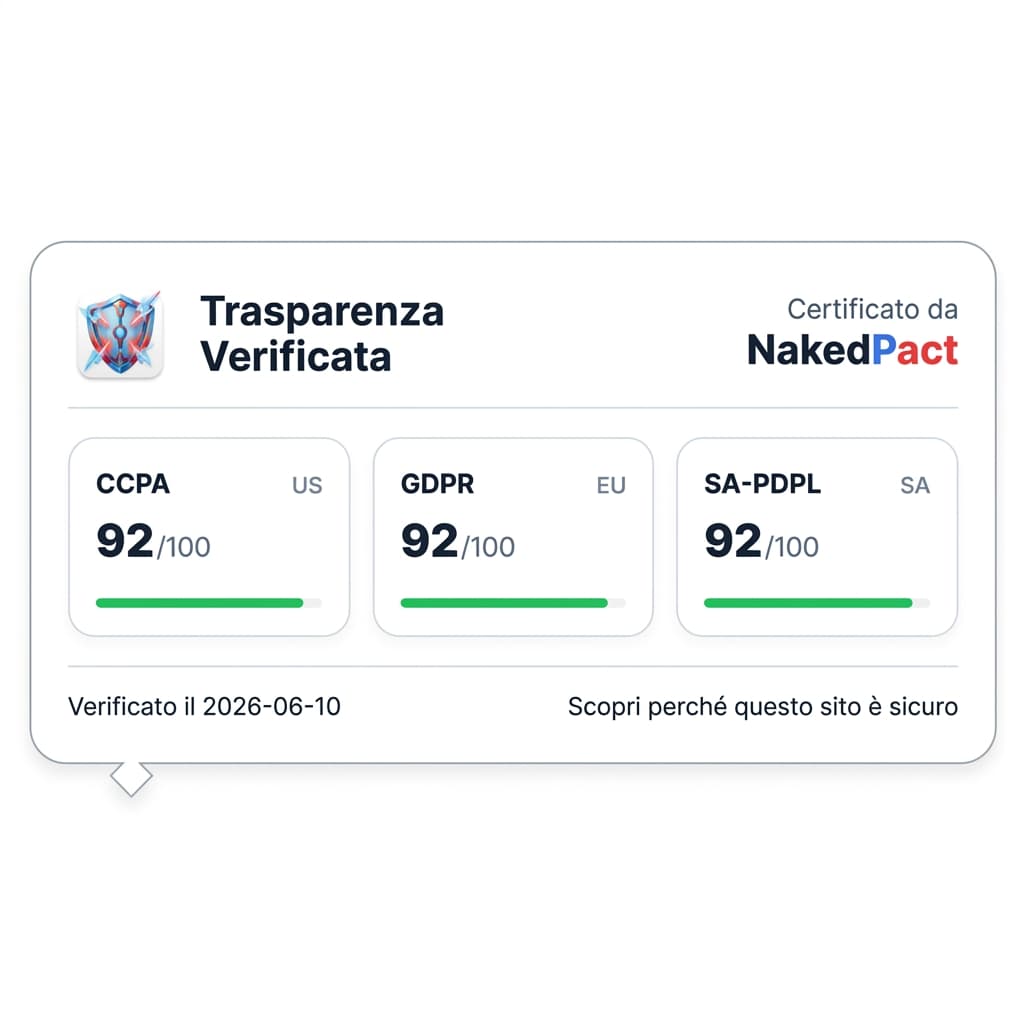
Do you own a website?
Want to communicate your data processing transparency to your users? Dynamically use our badge and showcase your platform's compliance.
Recommended Readings


🛡️ Protect your rights with one click
Don't risk signing abusive clauses. Install the free NakedPact extension for Chrome or Firefox and instantly analyze any contract on the web.
Don't trust, verify.
Now that you know the risks, don't sign blindly. Upload your contract to NakedPact and let AI find the hidden clauses for you. It's 100% free.
Analyze Your Contract Now