
ownCloud Privacy & Security Review: Is Self-Hosted Cloud Storage Safe?

Table of Contents
How secure and privacy-respecting is ownCloud for storing your files?
ownCloud is highly secure when self-hosted with HTTPS, server-side encryption, and 2FA. However, it is not zero-knowledge by default; the server operator can access files. For true privacy, use client-side encryption like Cryptomator or E2EE apps.
What the service offers (strengths and weaknesses)
Strengths
- Full data control: self-hosted on your own server, no third-party access.
- Open-source: code is auditable and transparent.
- Encryption options: TLS in transit, AES-256 at rest, and external E2EE support.
- Compliance: GDPR-friendly when hosted in EU; supports data portability and deletion.
- Extensible: apps for collaboration, calendar, contacts, and more.
Weaknesses
- Not zero-knowledge by default: server admin can see files unless client-side encryption is used.
- Complex setup: requires technical knowledge to secure properly.
- No built-in E2EE: relies on third-party tools like Cryptomator.
- Performance: self-hosting may be slower than commercial clouds.
- Support: community-driven; paid support available but limited.
Privacy and ToS analysis
ownCloud's privacy depends on your hosting. If you host in the EU, data is subject to GDPR. The software does not scan files for AI training or telemetry by default. However, if you use ownCloud's hosted version (ownCloud.com), check their ToS for data processing. The CLOUD Act applies if data is stored on US servers; self-hosting outside US avoids it. Encryption: TLS 1.3 for transit, AES-256 for server-side encryption. No zero-knowledge unless you add client-side encryption.
Practical guide: how to protect your privacy on ownCloud
- Enable 2FA: Go to Settings > Security > Two-Factor Authentication and set up TOTP or U2F.
- Use client-side encryption: Install Cryptomator or Rclone crypt remote to encrypt files before upload.
- Disable telemetry: In config.php, set 'instanceid' and 'secret' to random values; disable update checks.
- Secure sharing: Use password-protected shares with expiration dates; disable public uploads.
- Harden server: Use HTTPS with Let's Encrypt, firewall, regular updates, and fail2ban.
CCPA/CPRA comparison (Robin Hood Rule)
Under California CCPA and CPRA, users have rights to access, delete, and opt out of data sales. ownCloud self-hosted gives you full control, exceeding these rights. Compared to the American model, where third-party cloud providers may share data, ownCloud puts you in charge. However, if you use ownCloud's hosted service, ensure they comply with CCPA/CPRA by verifying their privacy policy.
FAQ
Is ownCloud zero-knowledge?
No, not by default. Server-side encryption means the server holds the keys. Use client-side encryption for zero-knowledge.
Can ownCloud be hacked?
Any software can be hacked. Keep ownCloud updated, use strong passwords, 2FA, and a firewall to minimize risk.
Does ownCloud sell my data?
No, ownCloud does not sell data. Self-hosted gives you full control; the hosted version may collect usage data, but not for sale.
ownCloud Privacy & Security Audit Matrix
| Category | Rating | Notes |
|---|---|---|
| Encryption at Rest | Medium | Server-side AES-256; keys on server |
| Encryption in Transit | High | TLS 1.3 mandatory |
| Zero-Knowledge | Low | Not default; requires Cryptomator |
| 2FA Support | High | TOTP, U2F, WebAuthn |
| Data Sovereignty | High | Self-hosted, choose jurisdiction |
| Open Source | High | AGPLv3, auditable |
| Telemetry | High | None by default; can disable |

NakedPact Editorial Committee
Article created by the NakedPact editorial team. Our mission is to analyze, simplify, and expose unfair terms and hidden risks in everyday contracts to protect citizens and consumers.
Sources and Legal References
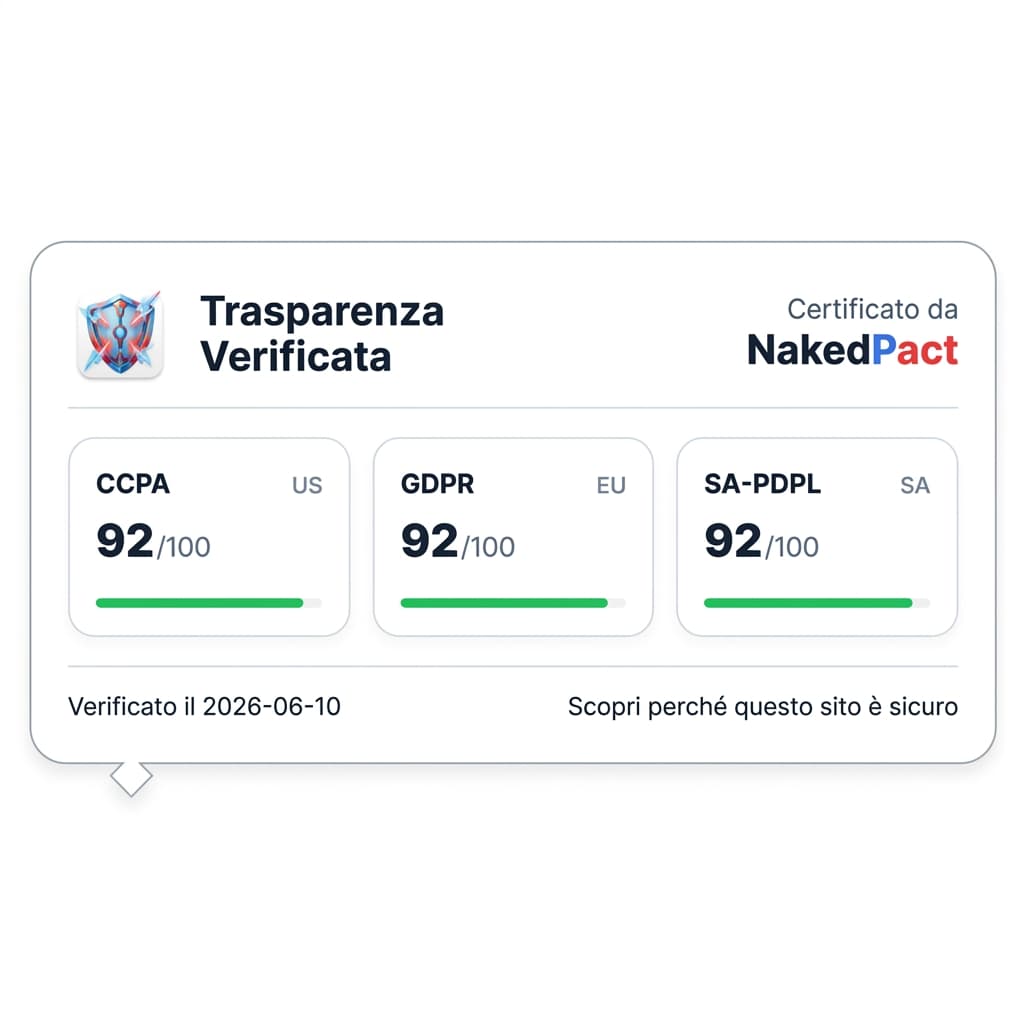
Do you own a website?
Want to communicate your data processing transparency to your users? Dynamically use our badge and showcase your platform's compliance.
Recommended Readings


🛡️ Protect your rights with one click
Don't risk signing abusive clauses. Install the free NakedPact extension for Chrome or Firefox and instantly analyze any contract on the web.
Don't trust, verify.
Now that you know the risks, don't sign blindly. Upload your contract to NakedPact and let AI find the hidden clauses for you. It's 100% free.
Analyze Your Contract Now