
GDPR vs CCPA: The Privacy Showdown – Swiss Schoolmaster Meets Hollywood Bouncer

विषय सूची
What Are the Main Differences Between GDPR and CCPA?
The GDPR (General Data Protection Regulation) is a comprehensive EU law that protects personal data of individuals in the European Economic Area, while the CCPA (California Consumer Privacy Act) grants California residents rights over their personal information. Key differences: GDPR applies to any organization processing EU data, CCPA targets for-profit businesses meeting thresholds. GDPR requires a legal basis for processing; CCPA focuses on disclosure and opt-out rights.
What Is GDPR?
Think of the GDPR as a strict Swiss schoolmaster. It demands a clear legal basis for every data processing activity, requires explicit consent (no pre-ticked boxes!), and imposes hefty fines up to 4% of global annual turnover. It’s the granddaddy of privacy laws, covering everything from data portability to the right to be forgotten.
What Is CCPA?
The CCPA is more like a flashy Hollywood bouncer. It gives California residents the right to know what data is collected, the right to delete it, and the right to opt out of its sale. It applies to businesses with $25M+ revenue, or those handling data of 50,000+ consumers. Fines are per violation, but it’s less prescriptive than GDPR.
Comparison of Data Protection Laws: Key Similarities
Both laws empower consumers with rights over their data. Both require transparency – you must tell people what you’re collecting and why. Both have extraterritorial reach: GDPR applies to any company targeting EU residents; CCPA applies to any business collecting data from California residents, even if based elsewhere.
Comparison of Data Protection Laws: Key Differences
- Scope: GDPR covers all personal data; CCPA covers personal information (broadly similar but with nuances).
- Consent: GDPR requires opt-in consent for most processing; CCPA uses opt-out for sale of data.
- Fines: GDPR: up to €20M or 4% of revenue; CCPA: $2,500 per unintentional violation, $7,500 per intentional violation.
- Private Right of Action: CCPA allows lawsuits for data breaches; GDPR does not (enforcement by regulators).
Compliance Requirements for Global Businesses
If you operate globally, you need to compare GDPR and CCPA carefully. Start by mapping your data flows: where are your users located? If you have EU or California users, both laws apply. Implement a unified privacy program that meets the highest standard – typically GDPR – and then layer on CCPA-specific requirements like a “Do Not Sell My Personal Information” link.
For more details, check the official GDPR text on EUR-Lex and the California Attorney General’s CCPA page.
Practical Tips to Avoid Fines
- Conduct a Data Protection Impact Assessment (DPIA) for high-risk processing.
- Update your privacy policy to include both GDPR and CCPA disclosures.
- Implement a consent management platform that handles opt-in (GDPR) and opt-out (CCPA).
- Train your team on data subject request handling – you have 30 days for CCPA, 30 days (extendable) for GDPR.
Remember: the Swiss schoolmaster and the Hollywood bouncer might have different styles, but both will kick you out if you don’t follow the rules. Stay compliant, stay global.

NakedPact संपादकीय समिति
NakedPact संपादकीय टीम द्वारा तैयार किया गया लेख। हमारा मिशन नागरिकों और उपभोक्ताओं की सुरक्षा के लिए दैनिक अनुबंधों में अनुचित शर्तों और छिपे हुए जोखिमों का विश्लेषण, सरलीकरण और उजागर करना है।
स्रोत और कानूनी संदर्भ
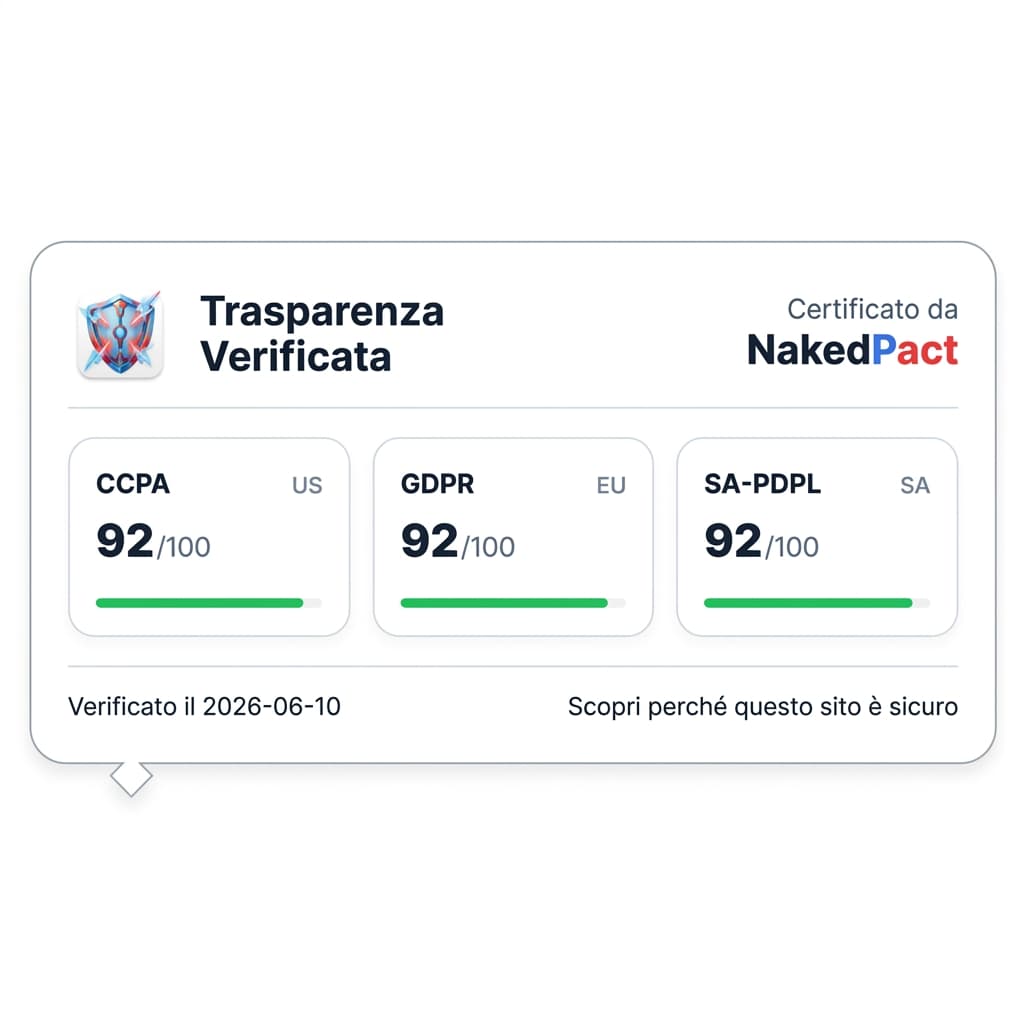
क्या आप एक वेबसाइट के मालिक हैं?
क्या आप अपने उपयोगकर्ताओं को डेटा प्रोसेसिंग की पारदर्शिता बताना चाहते हैं? हमारे बैज का गतिशील रूप से उपयोग करें और अपने प्लेटफ़ॉर्म का अनुपालन दिखाएं।
अनुशंसित पठन


🛡️ एक क्लिक के साथ अपने अधिकारों की रक्षा करें
अपमानजनक शर्तों पर हस्ताक्षर करने का जोखिम न उठाएं। Chrome या Firefox के लिए मुफ़्त NakedPact एक्सटेंशन इंस्टॉल करें और वेब पर किसी भी अनुबंध का तुरंत विश्लेषण करें।
Non fidarti, verifica.
Ora che sai quali sono i rischi, non firmare alla cieca. Carica il tuo contratto su NakedPact e lascia che l'Intelligenza Artificiale trovi le clausole nascoste per te. È 100% gratuito.
Analizza il tuo Contratto Ora