
FAQ GDPR: Practical Answers to Your Privacy Questions (With a Side of Sarcasm)

Πίνακας Περιεχομένων
Your GDPR Questions, Answered (Finally)
Let's face it: GDPR can be as clear as mud. But fear not—we're here to slice through the confusion with straight answers, a dash of irony, and the occasional packing analogy. Buckle up.
1. Handling people's data transparently is essential for maintaining which individual right under the GDPR?
Transparency is the bedrock of the Right to be Informed (Articles 13-14). This right requires you to tell individuals exactly what data you collect, why, how long you keep it, and with whom you share it—before you even touch their data. Think of it as the privacy equivalent of reading the terms and conditions out loud, but actually useful.
2. If somebody wants to take advantage of a price comparison service, which individual right might they exercise in order to have their data transferred?
That's the Right to Data Portability (Article 20). It lets individuals receive their personal data in a structured, commonly used, machine-readable format and transfer it to another controller—like moving your contacts from one email provider to another. Perfect for price comparison services: you can hand over your shopping history without starting from scratch.
3. What is the maximum length of time you can hold data for under the GDPR?
There's no fixed maximum—GDPR's Storage Limitation Principle (Article 5(1)(e)) says you must keep data only as long as necessary for the purpose you collected it. Once that purpose is served, delete it. So if you're holding onto customer data 'just in case,' you're violating the law. Set retention schedules, automate deletion, and don't hoard data like a digital dragon.
4. Which organisation is responsible for enforcing data protection law in the UK?
The Information Commissioner's Office (ICO) is the UK's independent regulator for data protection. They enforce the UK GDPR, issue fines up to £17.5 million or 4% of global turnover, and provide guidance. If you're in the UK, the ICO is your go-to for complaints and compliance advice. Check their official site for the latest.
5. It's not enough to just follow the regulation, you also need to prove that you're following the regulation. Which principle of the GDPR does this apply to?
That's the Accountability Principle (Article 5(2)). It means you must not only comply with GDPR but also demonstrate compliance through documentation, policies, and records of processing activities. In other words, if you can't prove it, you didn't do it. Keep a paper trail—your future auditor will thank you.
6. What does data minimisation mean under the GDPR?
Data Minimisation (Article 5(1)(c)) means you should only collect personal data that is adequate, relevant, and limited to what is necessary for your purpose. Imagine packing for a weekend trip: you don't bring your entire wardrobe, just the essentials. Same with data—don't ask for someone's shoe size if you're just sending a newsletter.
7. Does the GDPR forbid workers from taking personal data or devices outside the workplace?
No, but it requires appropriate security measures. If employees take laptops or data home, you need encryption, VPNs, and clear policies. The GDPR doesn't ban remote work—it just demands you protect data like it's your firstborn. So yes, you can work from a café, but encrypt that spreadsheet first.
8. Is there any difference between the UK GDPR and the EU GDPR?
Yes, post-Brexit. The UK GDPR is essentially the EU GDPR enshrined into UK law, but with tweaks: different supervisory authority (ICO vs. EDPB), minor terminology changes (e.g., 'UK GDPR' instead of 'GDPR'), and separate adequacy decisions. In practice, they're nearly identical, but cross-border transfers between UK and EU now require additional safeguards. Keep an eye on both.
9. GDPR lagen
In Sweden, the GDPR is implemented through the Dataskyddsförordningen (2018:218) and supplementary national laws like the Dataskyddslag (2018:218). These fill in gaps left by the GDPR, such as rules on employee data and credit information. If you operate in Sweden, you must comply with both the GDPR and local adaptations—think of it as GDPR with Swedish meatballs.
10. GDPR eurlex
To read the official GDPR text, head to EUR-Lex (Regulation (EU) 2016/679). It's the authoritative source in all EU languages. Use it to check exact wording, recitals, and amendments. Don't rely on summaries—go straight to the source. Your compliance will thank you.
Still confused? Don't be. GDPR is about respect, not rocket science. Treat people's data like you'd want yours treated, document everything, and you're 90% there. The other 10%? That's what lawyers are for.

Συντακτική Επιτροπή NakedPact
Άρθρο δημιουργημένο από τη σύνταξη του NakedPact. Αποστολή μας είναι να αναλύουμε, να απλοποιούμε και να εκθέτουμε καταχρηστικούς όρους και κρυφούς κινδύνους σε καθημερινά συμβόλαια για την προστασία των πολιτών και των καταναλωτών.
Πηγές και Νομικές Αναφορές
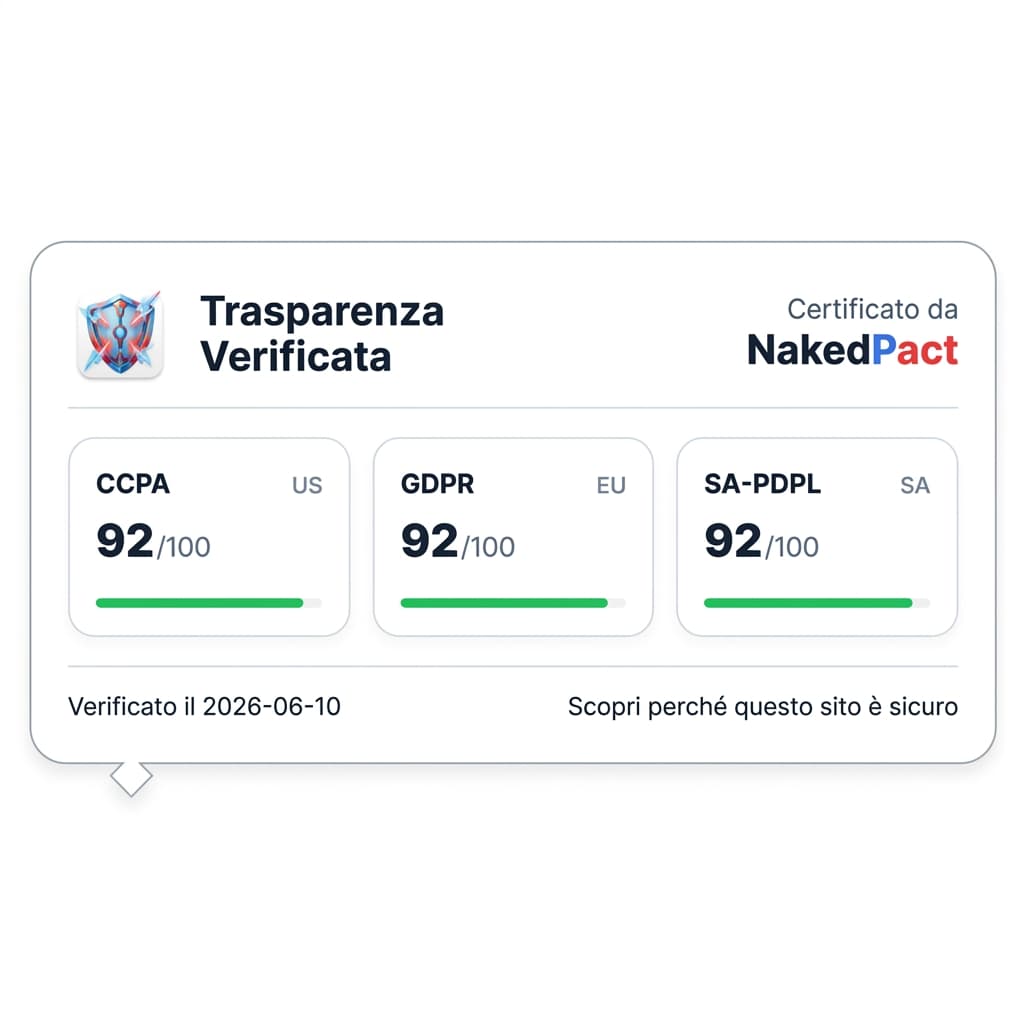
Είστε κάτοχος ιστότοπου;
Θέλετε να επικοινωνήσετε στους χρήστες σας τη διαφάνεια στην επεξεργασία των δεδομένων σας; Χρησιμοποιήστε δυναμικά το σήμα μας και αναδείξτε τη συμμόρφωση της πλατφόρμας σας.
Προτεινόμενα Αναγνώσματα


🛡️ Προστατέψτε τα δικαιώματά σας με ένα κλικ
Μην ρισκάρετε να υπογράψετε καταχρηστικούς όρους. Εγκαταστήστε τη δωρεάν επέκταση NakedPact για Chrome ή Firefox και αναλύστε αμέσως οποιοδήποτε συμβόλαιο στο διαδίκτυο.
Μην εμπιστεύεστε, επαληθεύστε.
Τώρα που γνωρίζετε τους κινδύνους, μην υπογράφετε στα τυφλά. Ανεβάστε το συμβόλαιό σας στο NakedPact και αφήστε την ΤΝ να βρει τους κρυφούς όρους. Είναι 100% δωρεάν.
Αναλύστε το συμβόλαιό σας τώρα