
Abusive Clauses in Service Contracts: How to Spot and Challenge Hidden Traps

Table of Contents
Legal Translation and Localization Services
We provide expert multilingual legal translation and localization services, ensuring your documents are accurately adapted for international jurisdictions. Our team of specialized linguists handles contracts, patents, and regulatory filings with precision, maintaining legal integrity while respecting cultural nuances and local legal frameworks.
Have you signed a service contract only to later discover hidden costs, disproportionate penalties, or unilateral price hikes? It happens. Every year, thousands of consumers find themselves bound by clauses that limit their rights.
Let's look at the most dangerous clauses in electricity, gas, phone, and internet contracts, how to recognize them, and what to do to challenge them. With NakedPact, you can upload your contract and receive a detailed analysis before signing.
The Most Common Abusive Clauses
1. Unilateral Contract Modifications
Many companies include clauses that allow them to change prices, terms, or services without your consent. This is illegal under the Italian Consumer Code (Article 33). If the provider modifies the contract, you have the right to withdraw without penalties within 30 days.
2. Disproportionate Early Termination Penalties
Some contracts impose high penalties if you decide to switch providers. The law requires penalties to be proportionate to the actual loss suffered by the provider. If a penalty exceeds 10% of the remaining contract value, it is likely abusive.
3. Automatic Renewal with Worse Terms
Automatic renewal clauses are common, but they become abusive if you are not informed of the new conditions in a timely manner. The provider must notify you at least 60 days before the expiration date. Otherwise, you can challenge the renewal.
4. Limitation of Provider Liability
Some companies exclude liability for damages from service interruptions, billing errors, or lack of support. These clauses are void if they limit rights such as service continuity or accurate billing.
How to Recognize an Abusive Clause
Here are some red flags:
- Vague language: phrases like 'the provider may change the terms at any time' are a warning sign.
- Fine print: clauses hidden in footnotes or tiny font are often abusive.
- Asymmetric rights: if the contract gives the provider many powers and you few, it is likely unbalanced.
What to Do If You've Already Signed
If you have already signed a contract with abusive clauses, you can:
- Challenge the clauses by sending a certified letter or PEC to the provider, citing the relevant articles of the Consumer Code.
- Request the nullity of the abusive clause: the rest of the contract remains valid, but the clause is removed.
- Contact a consumer association or the AGCM (Italian Competition Authority) to file a report.
Prevention is Better Than Cure
The best solution is to read the contract before signing. With NakedPact, you can upload the document in seconds and receive an automatic analysis that highlights suspicious clauses, hidden costs, and your rights.
Checklist: 5 Signs of Abusive Clauses
- The contract allows unilateral changes without notice
- Cancellation penalties exceed 10% of the remaining value
- Automatic renewal does not require a 60-day notice
- The provider disclaims liability for interruption damages
- There are hidden costs in fine print or footnotes
If you checked even one item, your contract may contain abusive clauses. Upload it to NakedPact for a full analysis.
How to Challenge Abusive Clauses
The relevant legislation is the Consumer Code (Legislative Decree 206/2005), which in Article 33 lists clauses considered abusive. These include unilateral changes without just cause, excessive penalties, and liability limitations. The law states that these clauses are void, but the rest of the contract remains valid. This means you can continue using the service without being bound by unfair conditions.
The first step to challenge an abusive clause is to send a formal communication to the provider, preferably via registered mail with return receipt or certified email (PEC). In the letter, you must specify the clause in question, explain why you believe it is abusive by citing the relevant legal articles, and request its removal or a contract amendment. Attach a copy of the contract and keep proof of sending.
If the provider does not respond within 30 days or refuses your request, you can turn to the Italian Competition and Market Authority (AGCM) or a consumer association. The AGCM can initiate proceedings for unfair commercial practices and impose sanctions. Alternatively, you can take the matter to a justice of the peace to have the clause declared void.
A faster option is mandatory mediation: before going to court, you must attempt to reach an agreement through a mediation body. This process is less expensive and quicker than ordinary litigation. Providers often prefer to settle rather than face a lawsuit.
With NakedPact, you can upload your contract and receive a report that automatically identifies potentially abusive clauses, with legal references and suggestions on how to proceed. Additionally, you can compare your contract with market best practices and find out if you are overpaying. Don't wait until it's too late: protect your rights today.

NakedPact Editorial Committee
Article created by the NakedPact editorial team. Our mission is to analyze, simplify, and expose unfair terms and hidden risks in everyday contracts to protect citizens and consumers.
Sources and Legal References
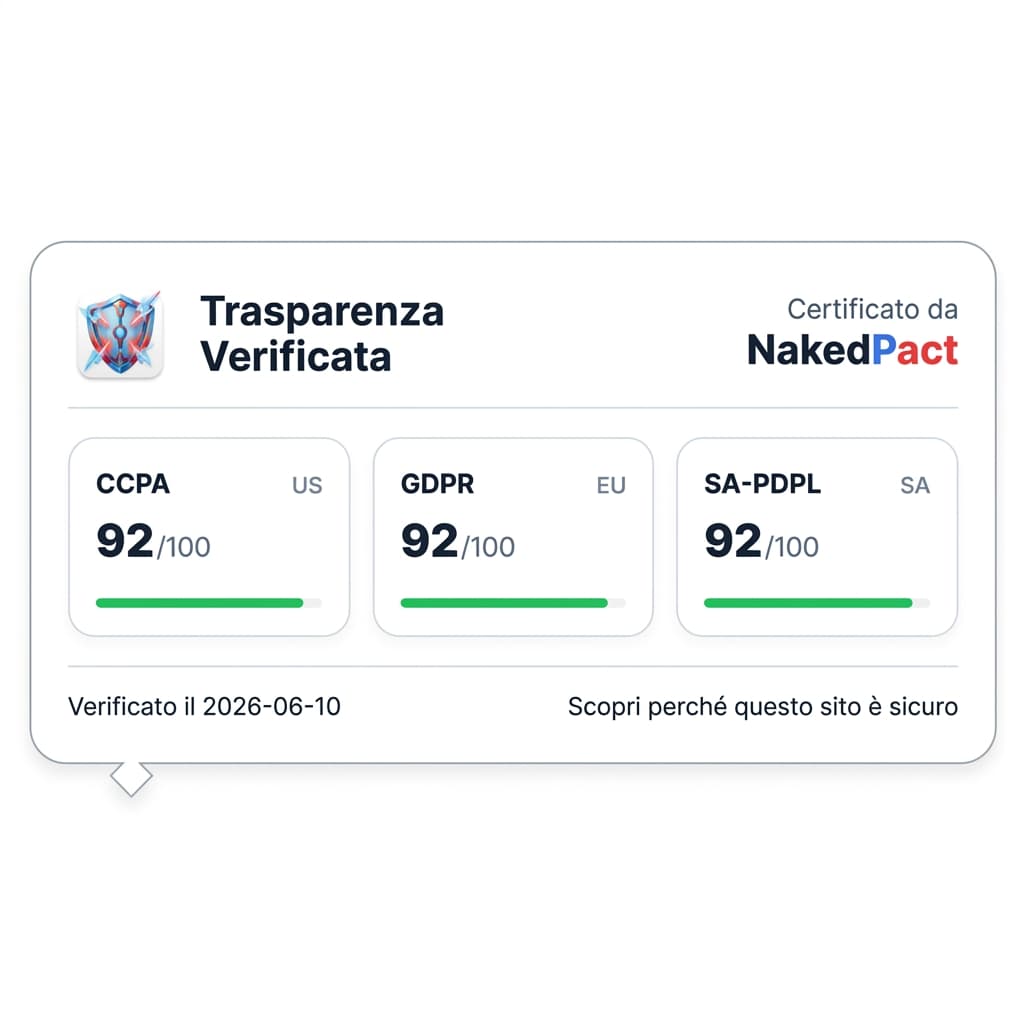
Do you own a website?
Want to communicate your data processing transparency to your users? Dynamically use our badge and showcase your platform's compliance.
Recommended Readings


🛡️ Protect your rights with one click
Don't risk signing abusive clauses. Install the free NakedPact extension for Chrome or Firefox and instantly analyze any contract on the web.
Don't trust, verify.
Now that you know the risks, don't sign blindly. Upload your contract to NakedPact and let AI find the hidden clauses for you. It's 100% free.
Analyze Your Contract Now