
AI Act: Your August 2 Deadline for Chatbot and Deepfake Transparency – Here's How to Comply

Table of Contents
What Changes on August 2, 2024?
From August 2, 2024, the first set of transparency obligations under the EU AI Act come into force. If your business uses chatbots, deepfakes, biometric systems, or AI-generated content, you must clearly inform users that they are interacting with AI. This is not optional – it's the law.
Think of it like this: you wouldn't let a robot pretend to be human at a party without telling anyone. The AI Act says the same for digital interactions. No more hiding behind a friendly avatar without disclosure.
Who Is Affected?
Any company operating in the EU or serving EU users that deploys AI systems covered by the Act. This includes customer service chatbots, AI-generated marketing images, deepfake videos for entertainment, and biometric categorization systems. Even small businesses using off-the-shelf AI tools must comply.
Practical Steps to Comply
1. Map Your AI Uses
Start by auditing every AI system in your organization. Document where and how AI interacts with users. For each use case, determine if it falls under the transparency obligations. For example, a chatbot on your website must be labeled as AI, and any deepfake content must be clearly marked.
2. Train Your Staff
Your employees need to understand the new rules. Conduct training sessions on what constitutes a deepfake, how to label AI-generated content, and the importance of transparency. Make it practical – use real examples from your business.
3. Adopt Internal Policies
Create or update your AI governance policy. Include procedures for labeling AI interactions, handling user inquiries about AI, and auditing compliance. Assign a responsible person or team to oversee AI Act compliance.
Featured Snippet: What Are the Penalties for Non-Compliance?
Non-compliance with the AI Act's transparency obligations can result in fines of up to 3% of annual global turnover or €15 million, whichever is higher. Regulators may also order the suspension of AI systems until compliance is achieved.
Deepfakes and Biometric Systems: Special Rules
Deepfakes must be labeled as artificially generated or manipulated. Biometric systems used for categorization (e.g., emotion recognition in workplaces) must inform individuals. The rules are strict: no hidden AI.
For more details, read the official AI Act text on EUR-Lex.
FAQ
Do I need to label AI-generated content in internal communications?
No, the transparency obligations apply to interactions with natural persons. Internal communications between employees are generally exempt, but check specific use cases.
What if my chatbot is clearly a bot (e.g., named 'BotBot')?
Even if the name suggests it's a bot, you must still inform users that they are interacting with AI. The obligation is explicit disclosure, not implied.
Are there exceptions for small businesses?
Small businesses are not exempt from transparency obligations. However, the AI Act includes some lighter requirements for SMEs in other areas, but transparency rules apply to all.

NakedPact Editorial Committee
Article created by the NakedPact editorial team. Our mission is to analyze, simplify, and expose unfair terms and hidden risks in everyday contracts to protect citizens and consumers.
Sources and Legal References
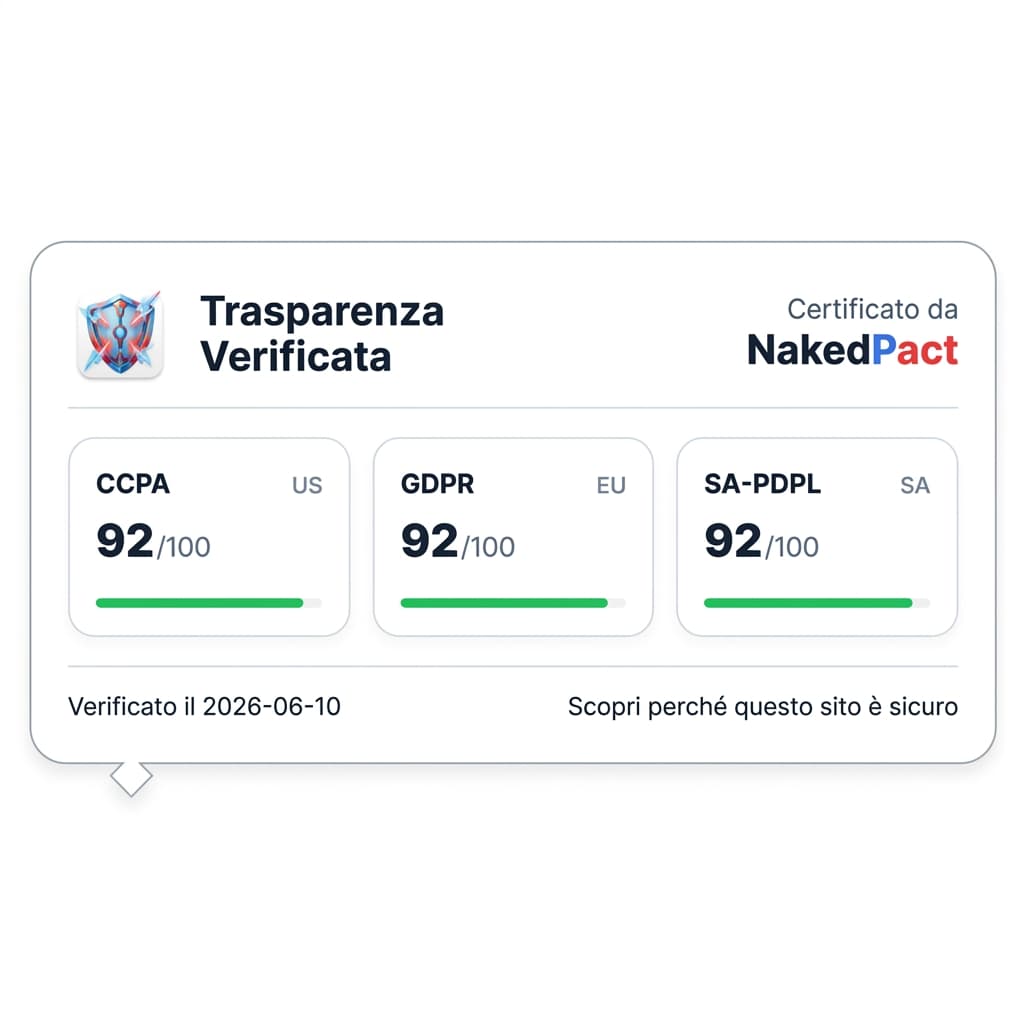
Do you own a website?
Want to communicate your data processing transparency to your users? Dynamically use our badge and showcase your platform's compliance.
Recommended Readings

Brazil's ANPD Just Put 21 Companies on Notice: Is Your LGPD Compliance Up to Snuff?
Brazil's ANPD Just Put 21 Companies on Notice: Is Your LGPD Compliance Up to Snuff?

Your Spending Habits Are Secretly Judging You: The Rise of Invisible Profiling
🛡️ Protect your rights with one click
Don't risk signing abusive clauses. Install the free NakedPact extension for Chrome or Firefox and instantly analyze any contract on the web.
Don't trust, verify.
Now that you know the risks, don't sign blindly. Upload your contract to NakedPact and let AI find the hidden clauses for you. It's 100% free.
Analyze Your Contract Now