
AI Act Transparency Rules: Your Countdown to August 2026 Starts Now

Table of Contents
Remember when GDPR hit and everyone scrambled to update privacy policies? The AI Act's transparency rules are that moment for AI. Starting August 2, 2026, any company using or developing AI systems in the EU must comply with Article 50's disclosure requirements. The European Commission just released final guidelines, and the clock is ticking.
What Does Article 50 Actually Require?
Think of it as a 'nutrition label' for AI. Providers and deployers must clearly inform users when they are interacting with AI, unless it's obvious from context. For AI-generated content (like deepfakes or text), you need to label it as artificially generated. And if you use emotion recognition or biometric categorization, you must tell people what's happening and why.
Featured Snippet Bait: What is the AI Act Article 50 transparency obligation? It requires providers and deployers of AI systems to disclose when users are interacting with AI, label AI-generated content, and inform individuals about emotion recognition or biometric categorization systems, effective August 2, 2026.
Who Is Affected?
If you develop an AI chatbot, generate marketing images with AI, or use facial recognition for access control, you're in scope. The rules apply to both providers (developers) and deployers (businesses using AI). Even if your AI is open-source, you may still need to comply.
Practical Steps to Prepare
- Audit all AI systems in use or development.
- Update user interfaces to include clear AI disclosures.
- Implement labeling mechanisms for AI-generated content.
- Train staff on transparency obligations.
- Review contracts with AI vendors to ensure compliance.
Don't wait until 2025 to start. The guidelines are final, and early adopters will have a competitive edge. As one compliance officer joked, 'Reading the AI Act is about as fun as cleaning grout with a toothbrush, but the fines are worse.'
FAQ
Does the AI Act apply to my company if we're based outside the EU?
Yes, if your AI system's output is used in the EU, or if you deploy AI in the EU market. The regulation has extraterritorial reach similar to GDPR.
What are the penalties for non-compliance?
Fines can reach up to 7% of global annual turnover or €35 million, whichever is higher. That's serious motivation to get compliant.
Do I need to label every AI-generated email or image?
Yes, unless it's obvious from context (e.g., a clearly fictional movie scene). The label should be clear and noticeable, not hidden in fine print.

NakedPact Editorial Committee
Article created by the NakedPact editorial team. Our mission is to analyze, simplify, and expose unfair terms and hidden risks in everyday contracts to protect citizens and consumers.
Sources and Legal References
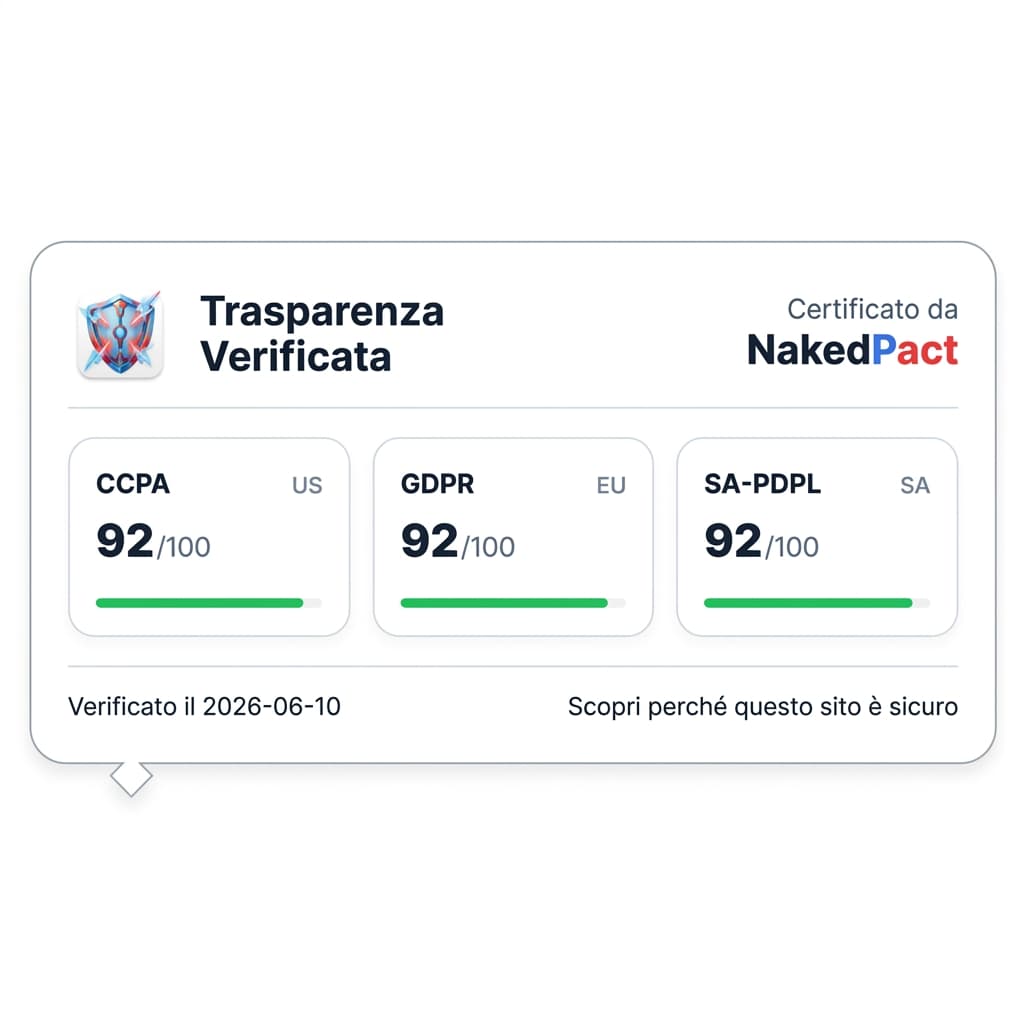
Do you own a website?
Want to communicate your data processing transparency to your users? Dynamically use our badge and showcase your platform's compliance.
Recommended Readings


🛡️ Protect your rights with one click
Don't risk signing abusive clauses. Install the free NakedPact extension for Chrome or Firefox and instantly analyze any contract on the web.
Don't trust, verify.
Now that you know the risks, don't sign blindly. Upload your contract to NakedPact and let AI find the hidden clauses for you. It's 100% free.
Analyze Your Contract Now